Over the last few months I've been pointing my phone at the sky over Broomfield, Colorado and letting SkySpottr - the plane spotting app I built - do the identifying. The app overlays live ADS-B data on the camera view, and when its on-device ML detector finds an aircraft in the frame that lines up with a real ADS-B track, it saves the capture with the aircraft's registration, type, and flight data attached.
That means every photo below came with its own receipts: tail number, aircraft type, and in some cases the route - no livery-squinting required. There was an ulterior motive too: capture-saving is only enabled in the dev build - which lives only on my phone as I iterate on the app - where it quietly banks these matched captures to build the training dataset for SkySpottr's aircraft detection model. If you want the nerdy version of how that works, I wrote up training the detector from scratch on my personal blog. Here are the captures worth sharing from April and May.
A C-17 Globemaster III, Low Over Superior
Boeing C-17A Globemaster III · USAF 99-0058 · April 5, 2026
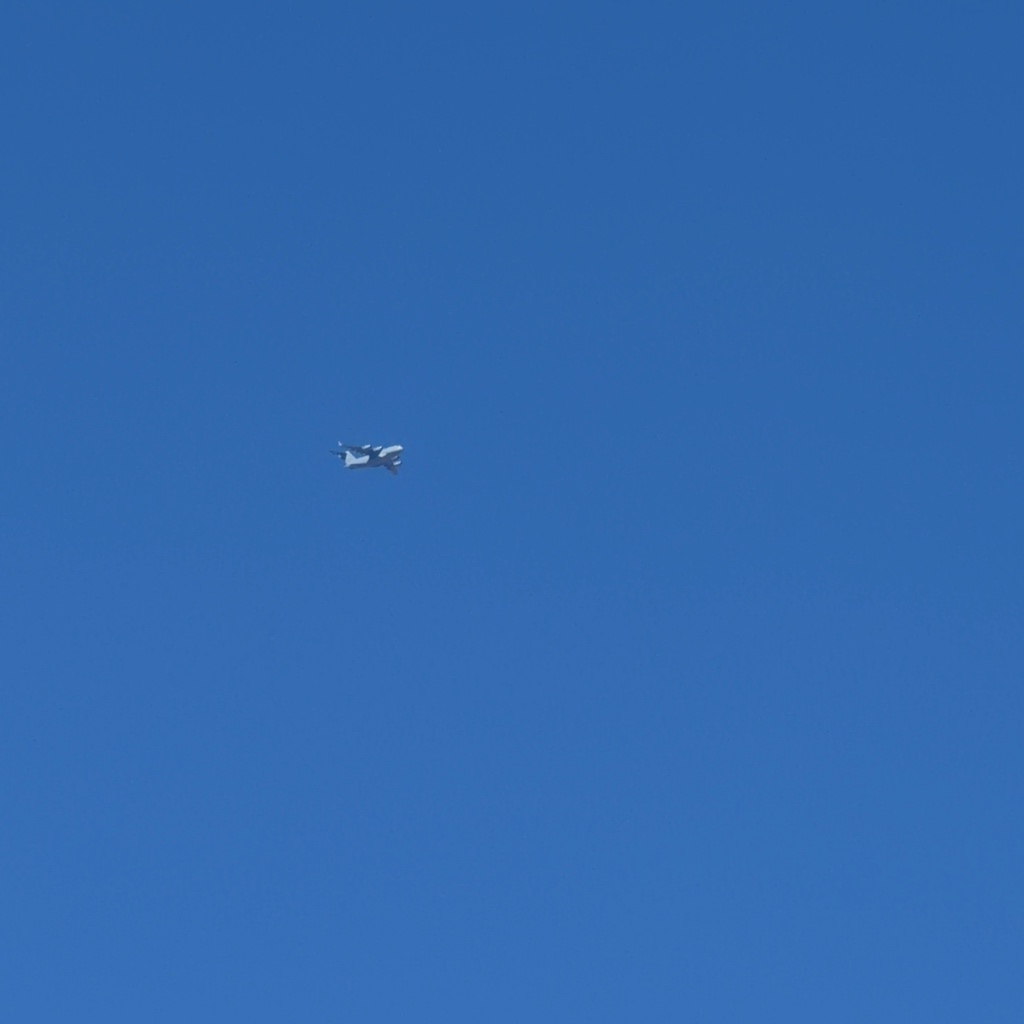
Early April brought a surge of heavy military transport traffic through Colorado as part of the buildup during the Iran crisis, and one afternoon a pair of C-17s came through eastbound over Superior - noticeably lower than the airliner traffic that usually crosses this stretch of sky. This one is tail 99-0058. The fun ADS-B detail: its broadcast callsign was literally just "X". Military aircraft often fly with minimal or masked callsigns, but the transponder still tags the airframe - the ICAO hex code resolves straight to the C-17A in the registry. (I only saved a frame of one of the two, which I regret.)
The Proof Shot: a Cutlass RG With Its Registration Readable
Cessna 172RG Cutlass · N3517S · April 7, 2026
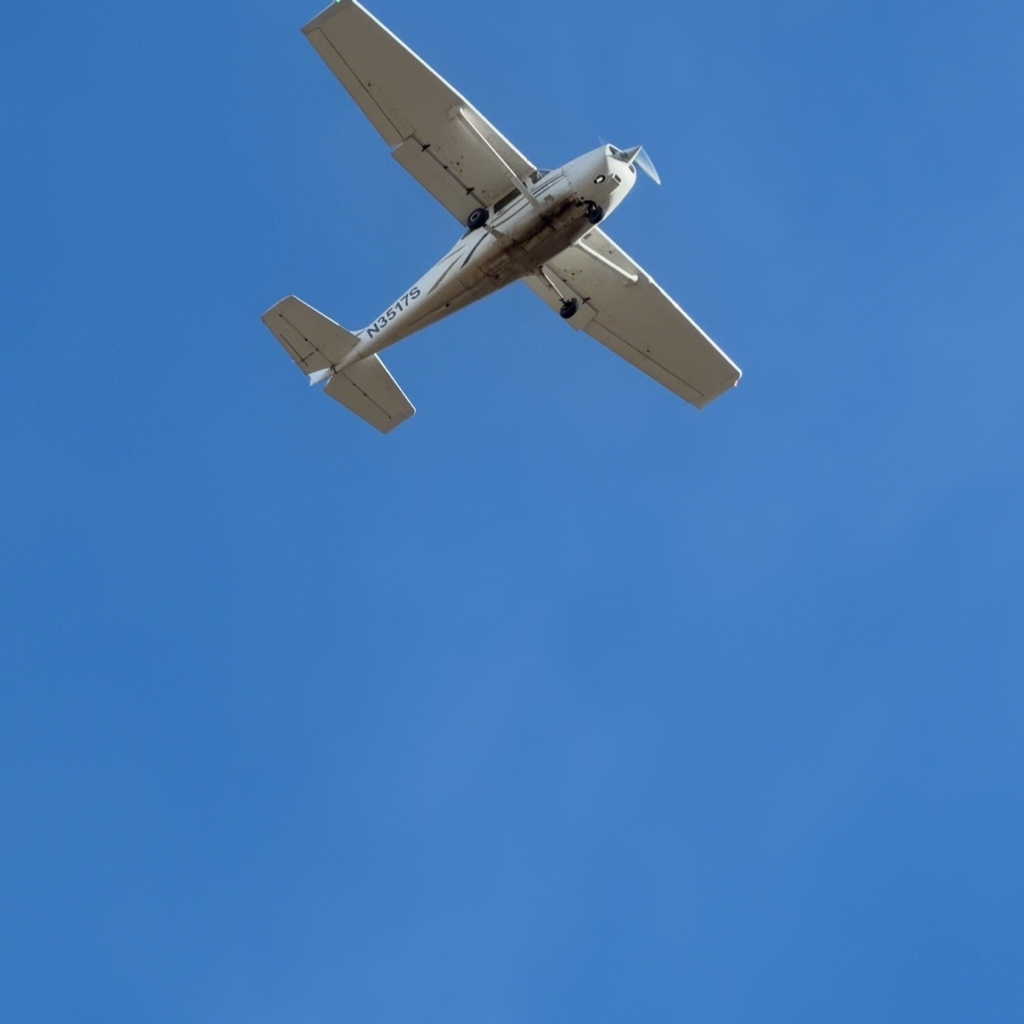
This is my favorite capture of the batch, because you can check the app's work with your own eyes: the registration under the wing reads N3517S, exactly what the ADS-B match said before I could zoom in far enough to read it. It's a 172RG Cutlass - the retractable-gear 172 - and the gear is down for the best possible reason: it was on final for runway 30R at Rocky Mountain Metropolitan (KBJC), touching down about ninety seconds after this frame. It was number two in the pattern behind a red-striped Cessna 172 (N4547E), which I'd caught a couple of minutes earlier:
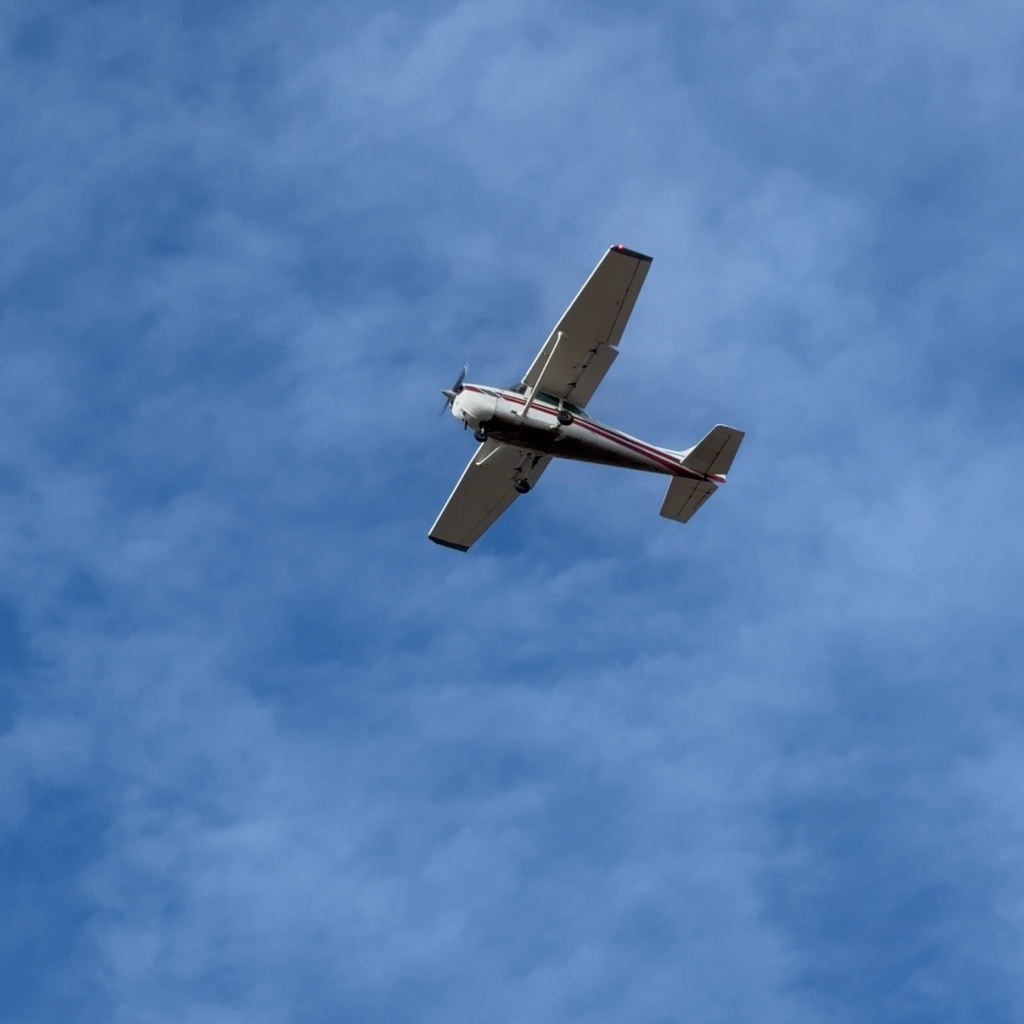
The detector called both at ~0.9 confidence, which for a phone pointed up at light singles working the pattern is exactly what I hoped this thing could do.
A United 777 Climbing Out for Honolulu
Boeing 777-200 · N776UA · UAL1805, Denver to Honolulu · May 1, 2026
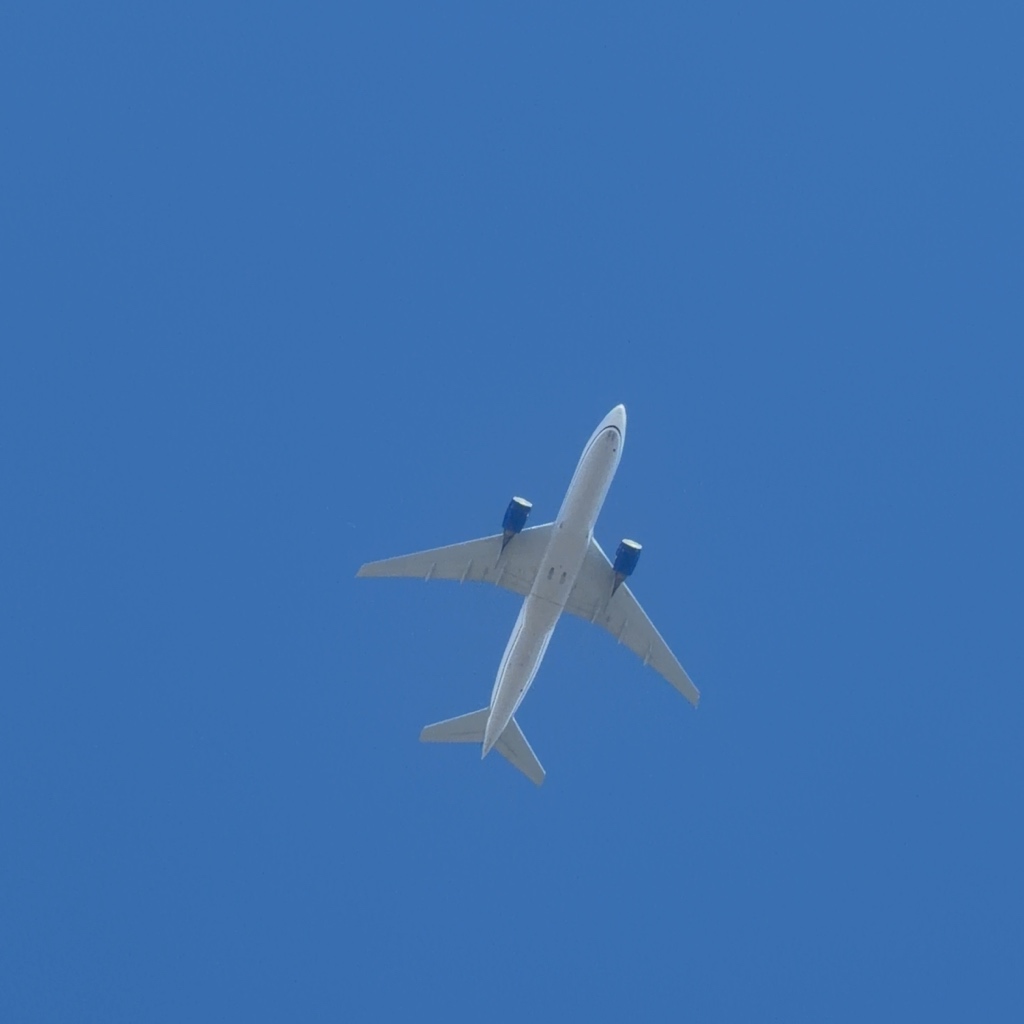
Widebodies overfly the Denver area all day at 30,000+ feet, and to the naked eye they're all the same white sliver. This one, at max camera zoom, resolved into a clean 777-200 planform - and the ADS-B side filled in the rest: N776UA flying as United 1805. But the numbers told a better story than "overflight": it was only 11,700 feet up, doing 349 knots westbound and climbing at 1,400 feet a minute. It wasn't crossing Colorado at all - it had just left Denver.
That made it an old friend. It didn't take long living under this patch of sky to figure out that the noticeably large plane crossing over the house around 12:30 most days is United's daily Denver-Honolulu 777, heavy with fuel and still climbing on its way west. This was that flight, evidently running well behind its usual midday slot - its trace shows it lifting off just before 5 pm and touching down in Honolulu about six and a half hours later. The difference between "some plane" and "the Honolulu flight, late, still in the climb" is exactly why I built the app.
A TBM 940 Dropping Into Rocky Mountain Metro
Daher TBM 940 · N980MM · May 17, 2026
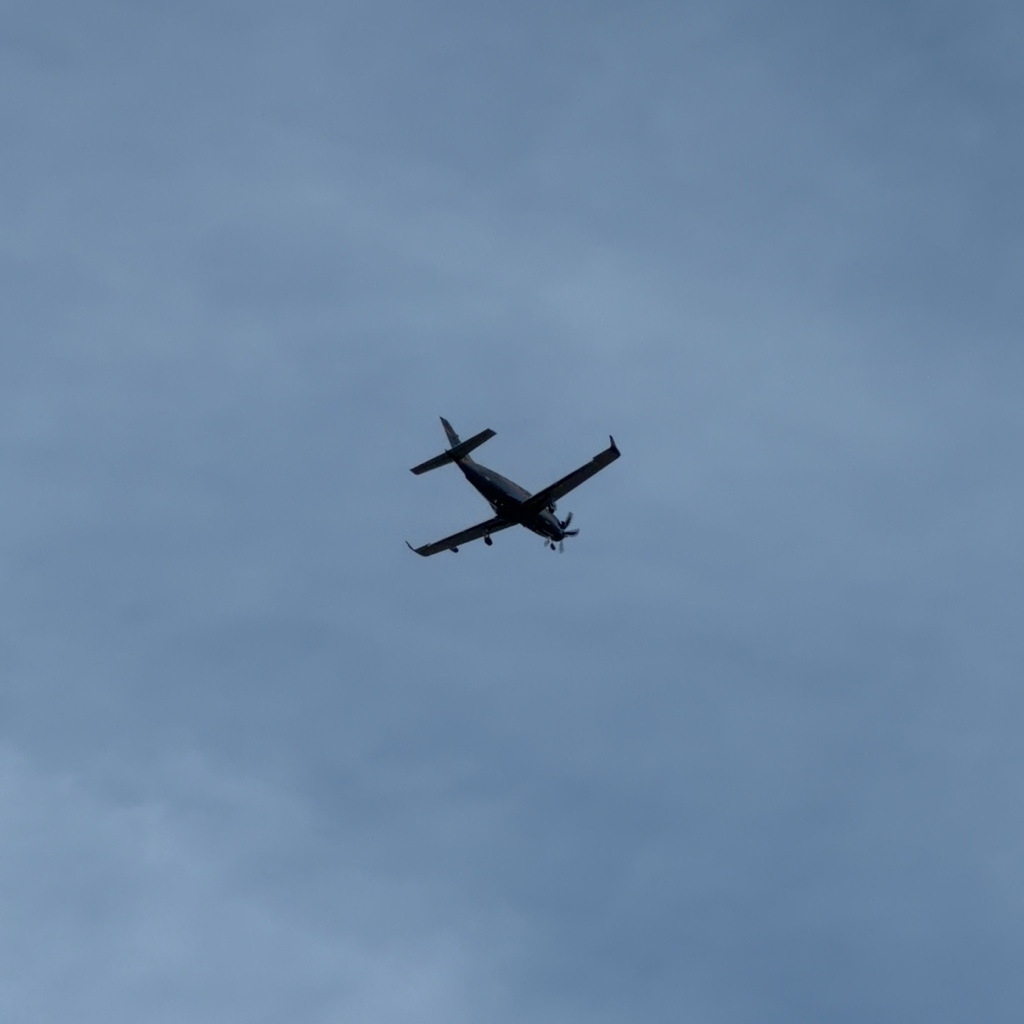
Caught this TBM 940 in the evening as it descended through the pattern, headed into Rocky Mountain Metropolitan Airport (KBJC) at nearly a thousand feet a minute. The TBM is one of the fastest single-engine turboprops flying, and KBJC gets a steady stream of them. If you've read the plane spotting guide, KBJC is my top local recommendation - this is the kind of traffic it serves up.
Golden Hour Helicopter
Bell 407 · N407LP · May 12, 2026
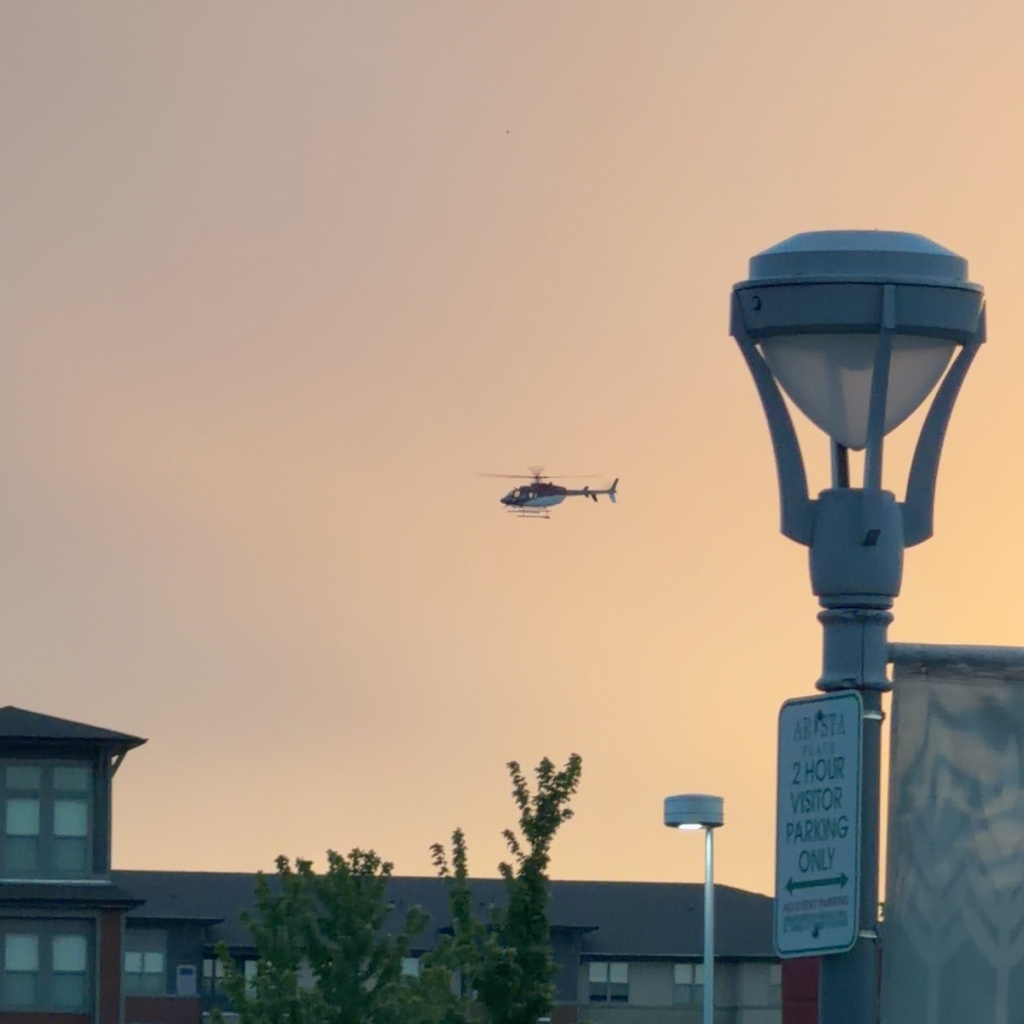
Sometimes the capture is just pretty. A Bell 407 crossing low and slow at sunset - skids, tail rotor, and rotor disc all silhouetted against the orange. Helicopters are a fun ADS-B case because they fly low and slow enough that the AR overlay tracks them smoothly across the sky.
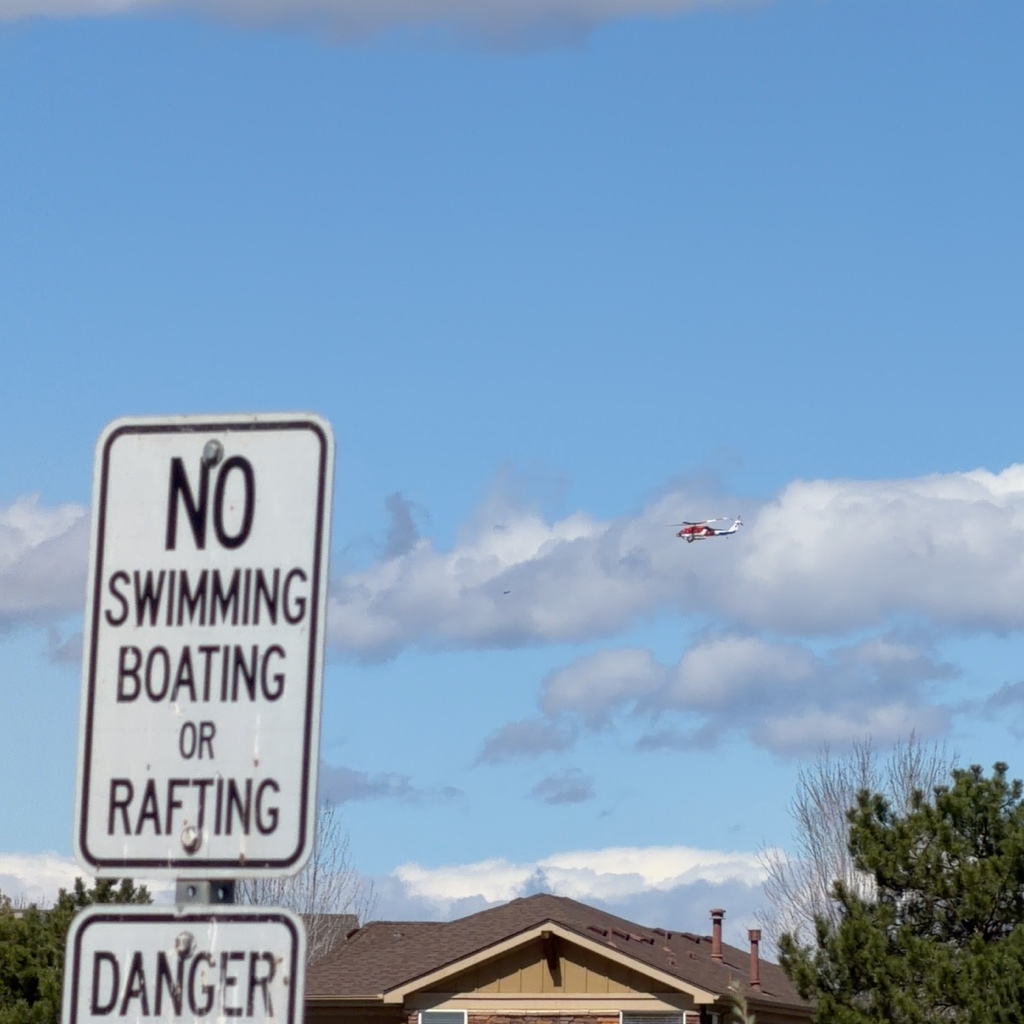
Rotorcraft bonus from earlier in the spring - a firefighting Sikorsky Black Hawk (N3802C) in red and white, passing more or less directly over the house, photobombed by my local reservoir signage:
The Rest of the Flightline
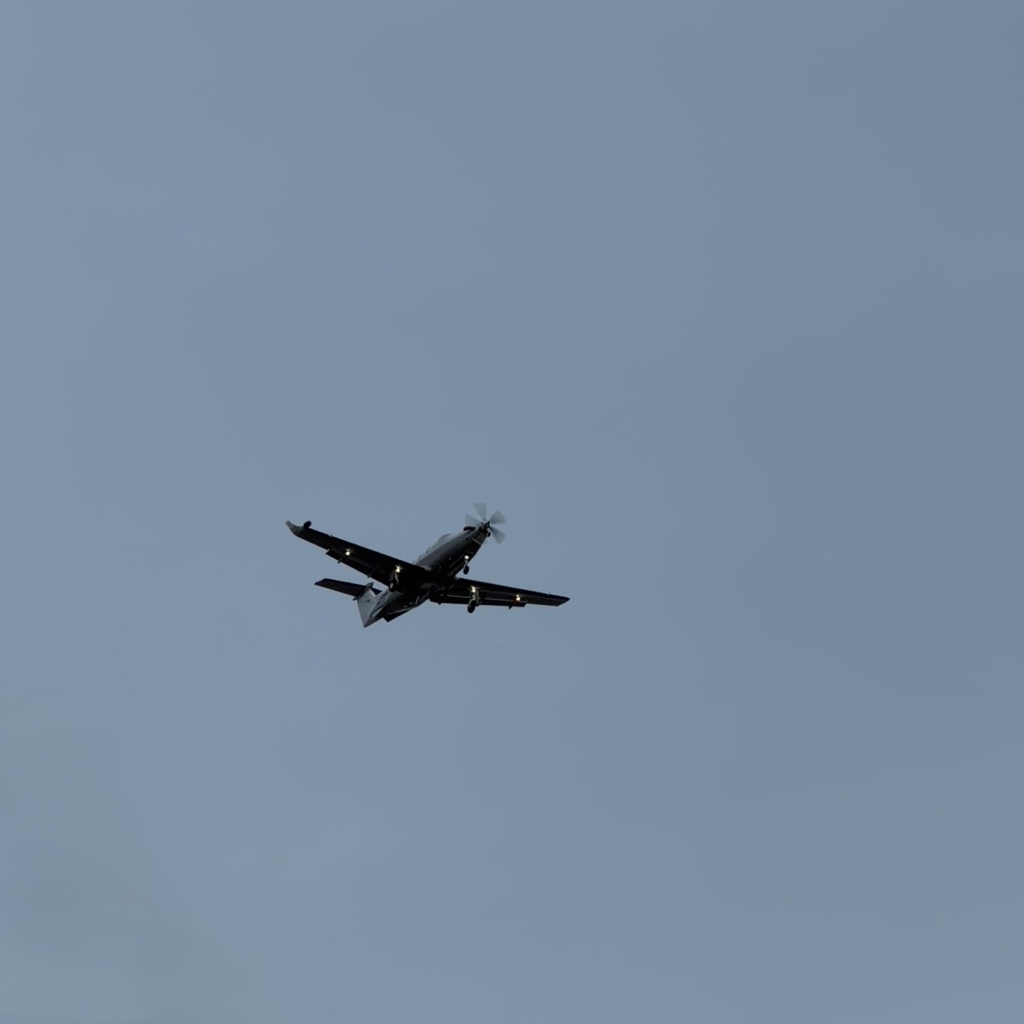
Pilatus PC-12 (N185PB), April 7 - landing lights blazing in flat evening light. The PC-12 silhouette (big single prop, T-tail... actually a low tail - the giveaway is the long straight wing and cargo-door hump) is unmistakable once you've seen a few.
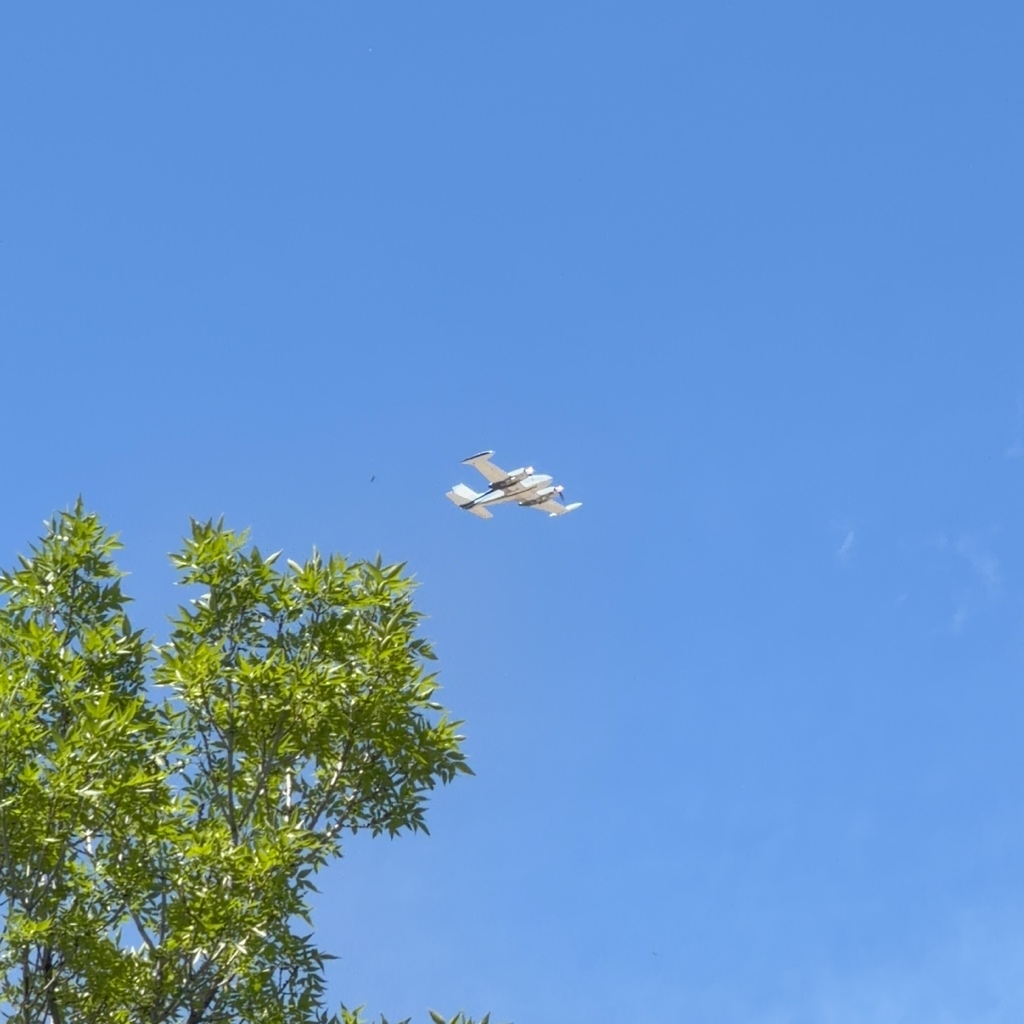
Cessna 310 (N3162L), May 23 - a classic twin over the neighborhood trees, tip tanks visible.
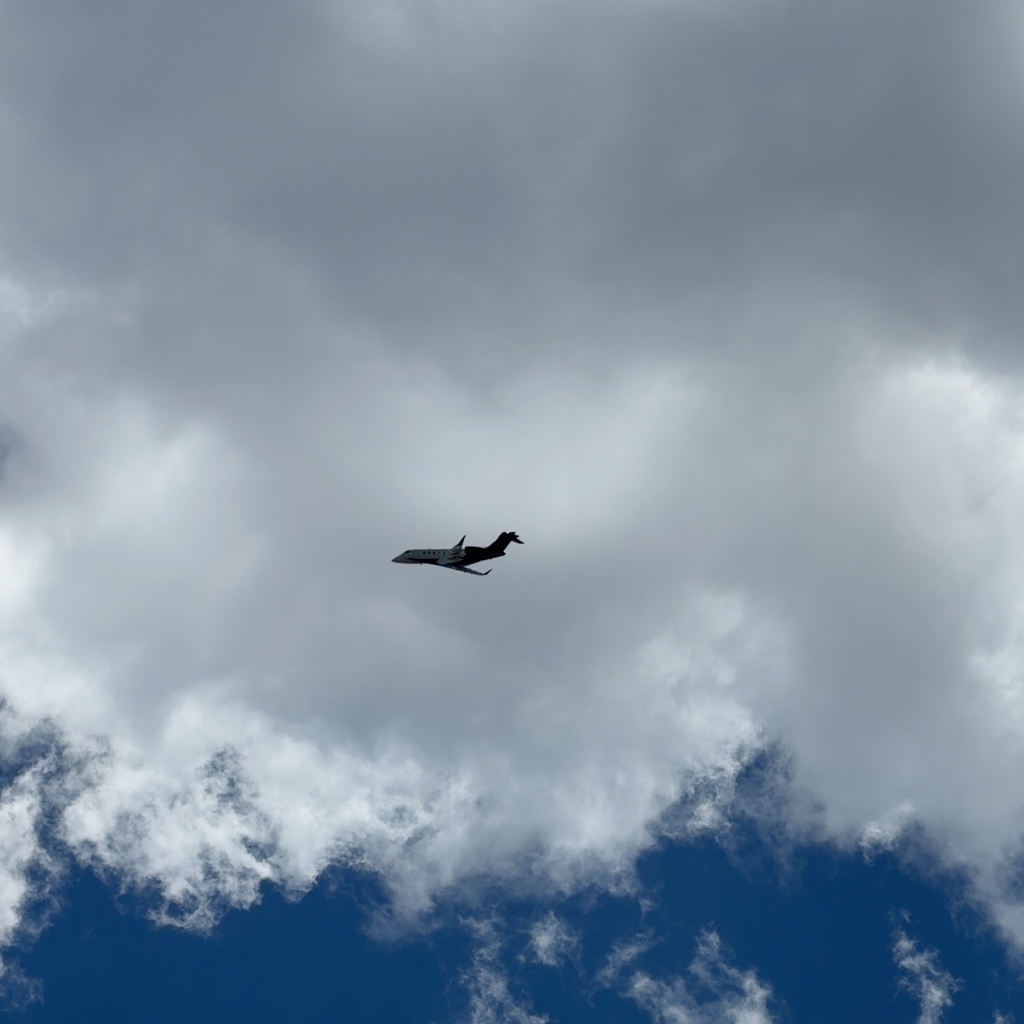
Bombardier Challenger 350 (N732AS), May 23 - climbing out through a broken deck, flying as XSR732 for the fractional operator Airshare.
How These Captures Work
Every photo above was identified automatically, in the moment, by matching two independent signals:
- ADS-B: the aircraft's own broadcast - position, altitude, callsign, and its ICAO hex code, which resolves to a registration and type. (Full explainer here.)
- On-device ML: a detector running on the phone finds aircraft in the camera frame.
When the detector's box lines up with where ADS-B says an aircraft should be on screen, the capture is tagged with that aircraft's identity. The readout under each photo - pressure altitude, ground speed, track, and vertical rate at the moment the shutter fired - comes from the aircraft's own ADS-B trace. No cloud processing of your camera feed, no guessing from paint schemes. If you want the deeper version of "what plane is that?", start with how to identify aircraft overhead.
Catch Your Own
Point your phone at the sky and see the flight number, type, altitude, and route of everything above you in augmented reality.